
Vastu Shastra: Tips, Directions, Benefits & Remedies
Introduction
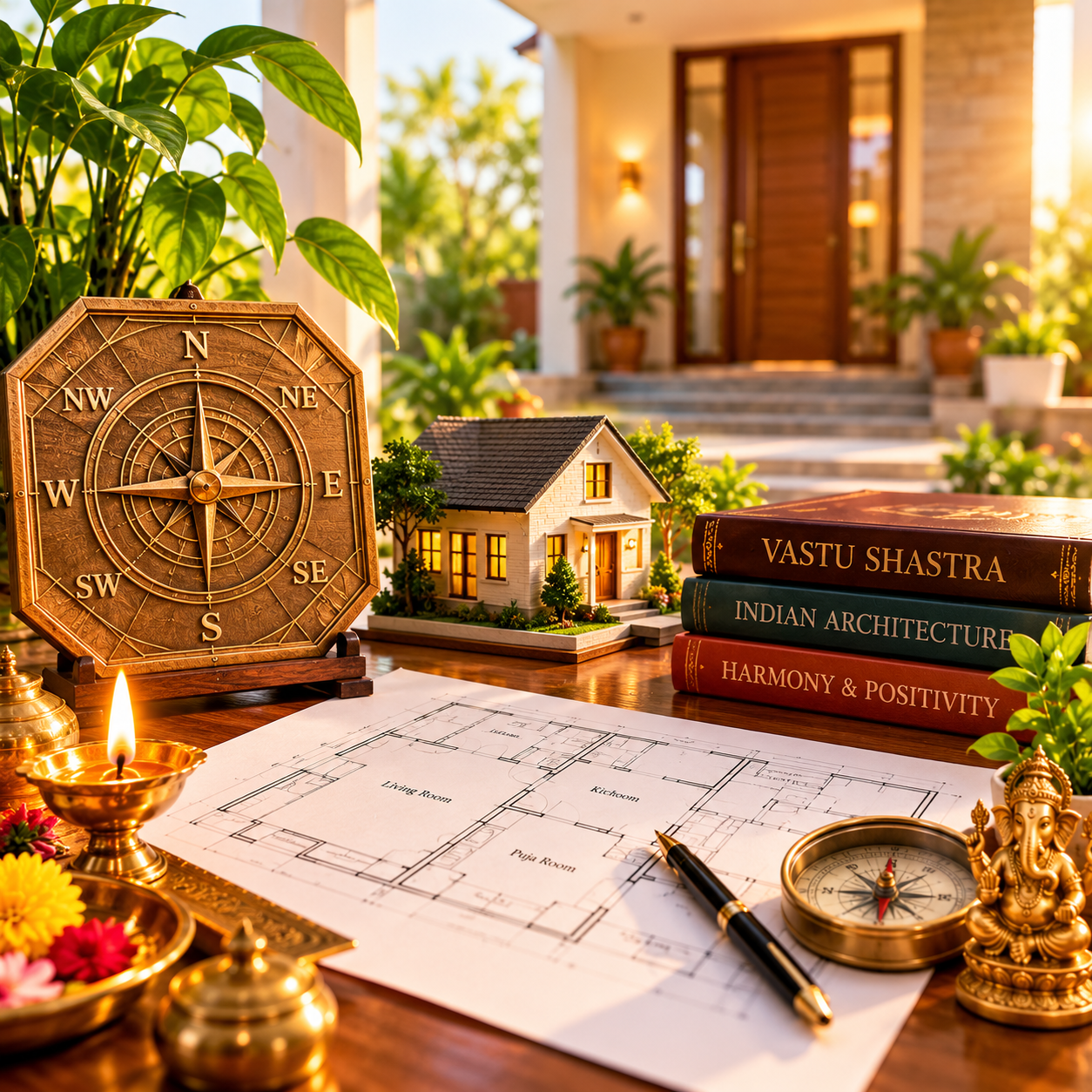
Vastu Shastra is a traditional Indian architectural system that focuses on the planning, design, and arrangement of buildings in relation to directions, spatial organization, and natural elements. It has been followed for generations by people who want to incorporate traditional principles into their homes, offices, and other living spaces.
From choosing the main entrance to arranging the kitchen, bedroom, and prayer room, Vastu Shastra offers guidelines intended to create an organized and harmonious environment.
Many homeowners consult Vastu practitioners before purchasing property, constructing a house, renovating an existing home, or setting up a workplace. Understanding its traditional principles can help you explore different layout options while considering your family's needs, comfort, and practical requirements.
In this guide, we will discuss the meaning of Vastu Shastra, the importance of directions, room placement, commonly followed Vastu tips, and traditional remedies.
What Is Vastu Shastra?
Vastu Shastra is a traditional Indian system of architecture and spatial planning. The word Vastu relates to a dwelling or place, while Shastra refers to a body of knowledge or principles.
Traditional Vastu concepts consider factors such as:
- The orientation and layout of a building.
- The placement of rooms and entrances.
- The arrangement of furniture and open spaces.
- The relationship between the five elements.
- Light, ventilation, and the use of available space.
Vastu guidelines differ across texts and contemporary practitioners. They are part of India's architectural and cultural heritage, but claims that a particular direction guarantees wealth, health, or success are not scientifically established.
The Five Elements of Vastu Shastra

The traditional Panchabhuta concept describes five fundamental elements that are often discussed in Vastu Shastra.

1. Earth (Prithvi)
Earth represents stability and support. In traditional Vastu discussions, it is associated with the foundation and structural placement of a building.

2. Water (Jal)
Water symbolizes purity and life. Traditional guidelines may consider the placement of water features, tanks, and related spaces.

3. Fire (Agni)
Fire represents energy and transformation. It is commonly associated with the kitchen and cooking activities in Vastu traditions.

4. Air (Vayu)
Air represents movement and circulation. Good ventilation and fresh air are also practical considerations for a comfortable home.

5. Space (Akash)
Space symbolizes openness. In practical home design, uncluttered areas and efficient use of available space can improve usability.
Importance of Directions in Vastu Shastra
Directions are an important part of traditional Vastu planning. Practitioners may associate particular directions with different activities and spaces.

| Direction | Traditional association |
|---|---|
| North | Often associated with prosperity and opportunities |
| South | Associated with stability in some Vastu interpretations |
| East | Associated with sunrise, light, and new beginnings |
| West | Considered in planning room orientation and building layout |
| Northeast (Ishan) | Traditionally associated with prayer and spiritual activities |
| Southeast (Agneya) | Traditionally associated with fire and kitchen placement |
| Southwest (Nairitya) | Often associated with stability and the master bedroom |
| Northwest (Vayavya) | Associated with movement and certain guest or auxiliary spaces |
These are common traditional associations, not universal architectural rules. The suitability of a room's location also depends on sunlight, ventilation, privacy, building structure, climate, and the needs of the people living there.
Vastu Shastra Tips for Different Areas of Your Home

1. Main Entrance Vastu
The main entrance is an important consideration in traditional Vastu planning. Many practitioners assess its direction, size, placement, and surrounding area.
Common tips:
- Keep the entrance clean and well-lit.
- Ensure that the doorway opens and closes comfortably.
- Avoid obstructing the entryway with unnecessary items.
- Choose a durable door and maintain the surrounding area.

2. Puja Room Vastu
In many Vastu traditions, the northeast is considered a preferred location for a prayer room, when the building layout permits.
Common tips:
- Keep the prayer area clean and peaceful.
- Arrange religious objects respectfully.
- Provide adequate light and ventilation.
- Use a stable, fire-safe surface for lamps and diyas.

3. Kitchen Vastu
The southeast is traditionally associated with fire and is often recommended for kitchen placement. However, safe appliance installation and a functional layout should remain priorities.
Common tips:
- Maintain separation between cooking and cleaning areas where practical.
- Ensure proper exhaust ventilation.
- Keep gas connections and electrical appliances safe.
- Store food and cooking supplies hygienically.

4. Bedroom Vastu
Southwest is commonly suggested for the master bedroom in traditional Vastu recommendations. Comfort, privacy, and a suitable furniture arrangement are equally important.
Common tips:
- Choose a comfortable mattress and supportive bed frame.
- Maintain clear walking space around the bed.
- Reduce unnecessary clutter.
- Minimize disruptive light and noise for better sleep.

5. Living Room Vastu
The living room is a shared area for family activities and welcoming visitors. Its arrangement should support conversation, comfort, and convenient movement.
Common tips:
- Keep frequently used pathways clear.
- Arrange seating to encourage conversation.
- Make use of natural light when available.
- Maintain adequate space for guests and family members.
Vastu Shastra for Offices and Businesses
Vastu principles are also used by some people when planning shops, offices, and commercial properties. Traditional recommendations may cover entrance placement, seating arrangements, workspaces, and storage areas.
For a practical and comfortable workplace:
- Arrange desks to support good posture and productivity.
- Provide adequate lighting and ventilation.
- Keep important walkways and emergency exits clear.
- Organize documents and supplies for easy access.
- Consider privacy, accessibility, and the needs of employees and customers.
Some Vastu practitioners associate particular directions with business growth or financial prosperity. These associations are traditional beliefs rather than guarantees of commercial success.
Common Vastu Doshas and Their Traditional Remedies
In Vastu discussions, the term Vastu Dosh is used for layouts or features that a practitioner considers inconsistent with particular traditional guidelines.
Examples may include a main entrance in a disfavored location, an unsuitable room arrangement, or concerns about the placement of a kitchen, staircase, or water source. Interpretations vary by tradition and by the specific property.

Some commonly suggested approaches include:
- Decluttering: Organize the space and remove items that are no longer needed.
- Improving lighting: Make dark areas more usable with suitable lighting.
- Ventilation: Improve airflow where the structure permits.
- Traditional prayer: Some households perform Vastu Puja or Vastu Shanti Puja according to their customs.
- Layout adjustments: If practical, review furniture placement or room use before considering expensive structural changes.
- Professional assessment: Consult a qualified architect or structural engineer for building safety, construction, or renovation concerns.
Religious rituals may hold personal and cultural significance, but they are not scientifically established methods for correcting building defects or guaranteeing financial and personal outcomes.
Important: Do not demolish structural elements, modify electrical or gas installations, or spend large amounts on remedies solely because of a fear-based Vastu claim. Obtain qualified professional advice before making major changes.
Vastu Shastra for a New Home
If you are purchasing or constructing a new house, you can consider traditional Vastu preferences alongside practical design requirements.
Before finalizing a property, review the following:
- Plot and orientation: Understand the plot shape, road access, and direction of the property.
- Floor plan: Assess the placement and size of rooms.
- Natural light: Check sunlight exposure and shading.
- Ventilation: Ensure that rooms have appropriate airflow.
- Water and drainage: Confirm that plumbing and drainage systems are properly designed.
- Structural safety: Check construction quality and applicable building regulations.
- Religious preferences: If important to your family, consult a Vastu practitioner before finalizing the layout.
You can also consult your architect and Vastu practitioner together so that traditional preferences can be considered without compromising safety, accessibility, or functionality.
Frequently Asked Questions (FAQs)
1. What is Vastu Shastra?
Vastu Shastra is a traditional Indian system of architecture and spatial planning that considers directions, room placement, and the organization of buildings.
2. Which direction is considered best for a house entrance?
Traditional recommendations vary, and several entrance directions may be considered suitable depending on the specific Vastu method. Practical factors such as access, lighting, safety, and the floor plan should also be considered.
3. Is a northeast-facing house considered auspicious?
Some Vastu traditions consider northeast orientation favorable. However, there is no scientific evidence that a particular house orientation guarantees prosperity, health, or happiness.
4. What is Vastu Dosh?
Vastu Dosh is a traditional term for building layouts or placements that some Vastu practitioners interpret as unfavorable according to their chosen guidelines.
5. Can Vastu Dosh be corrected without demolition?
Some practitioners suggest non-structural adjustments, such as rearranging furniture or changing how a room is used. Whether a change is appropriate depends on the actual layout and practical requirements of the property.
6. Is Vastu Shanti Puja necessary for a new home?
Some families perform Vastu Shanti Puja as a religious ceremony before moving into a new house. It is a matter of personal belief and family tradition rather than a universal requirement.
7. When should I consult a Vastu expert?
You may consult a practitioner when planning a new home, purchasing property, renovating a building, or exploring traditional Vastu recommendations for an existing layout.
Consult NakshatraSutra for Vastu Guidance
Choosing a home or planning a new living space can involve many questions. People interested in traditional Vastu Shastra may seek guidance about directions, room placement, property layout, and religious practices.
NakshatraSutra offers an online platform for astrology-related information and services. You can visit the website and contact the team to enquire about current Vastu consultation availability.
Before booking, ask about the scope of the consultation, the information required, applicable charges, and whether a floor plan or property details are needed.
Explore Vastu Guidance with NakshatraSutra
Learn about traditional Vastu principles and enquire about guidance for your home or property.
Visit NakshatraSutra
Conclusion
Vastu Shastra remains an important part of India's traditional architectural and cultural heritage. Its principles offer one way to think about the orientation, arrangement, and use of living spaces.
Whether you are building a new house, buying an apartment, or renovating your office, consider traditional preferences alongside sound architecture, natural lighting, ventilation, structural safety, and your family's everyday needs.
If you wish to explore traditional Vastu interpretations, a consultation can help you understand the recommendations and decide which, if any, align with your preferences.
What This Means for You
Every astrology consultation is personal. The same planetary pattern can be experienced differently depending on the complete birth chart, current life circumstances and the choices a person makes. This is why a complete reading is more useful than a single prediction taken out of context.


Key Points to Remember
- Look at the complete chart instead of one planetary placement.
- Consider timing and current planetary movements when relevant.
- Use astrology as a tool for reflection and personal guidance.
- Balance spiritual insights with practical decision-making.
At NakshatraSutra, our approach focuses on clear, practical and personalised guidance. If you have a specific question about your birth chart, relationship, career, gemstone or personal journey, a consultation can help you explore the relevant astrological indicators in greater detail.


All Comments
Joanne Theresa
Very informative article. The explanation makes the topic easy to understand and gives a useful perspective for beginners.
Riya Kapoor
I enjoyed reading this. The practical approach to astrology is especially helpful.
Aman Mehta
A clear and simple explanation. Looking forward to more articles on planetary transits and birth charts.